Finding Recovery Support WhenYou’re Homeless: A PeerPerspective
By: Skye O’Neill, CPFS, RCP Outreach Coach, Serenity Recovery Connection
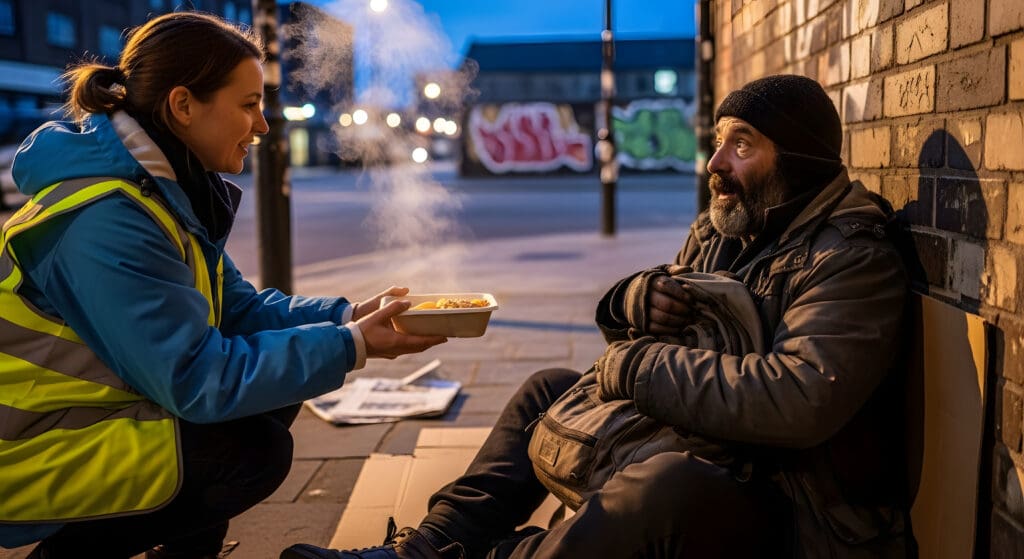
Living without stable housing can make getting recovery support feel complicated, even before you feel hopeful. Your phone might be dead, your belongings could be stolen, transportation is unreliable, and most services expect you to fit your life around their schedules or are spread out across the city. I quickly learned that wanting help and being able to access it are two very different things.
When I was spending my days trying to gather enough money for food, people often offered help from their car windows —numbers, promises, programs. Most of it led nowhere. After a while, you stop expecting consistency.
Many unhoused people I meet now tell me the same thing: the hardest part isn’t finding resources, it’s finding
follow-through from agencies.
That disconnect keeps people from trusting organizations. It’s also why at Serenity Recovery Connection (SRC), our approach is different. We don’t assume one path works for everyone. We use a multiple-pathways recovery model, rely on peer recovery support, and partner with agencies such as Hope COS and Homeward Pikes Peak, as well as others across the region, so people can connect to resources that match their real-life circumstances.
Jeremy showed me how powerful that approach can be.
Jeremy’s Turning Point and How Recovery Works When You’re Homeless
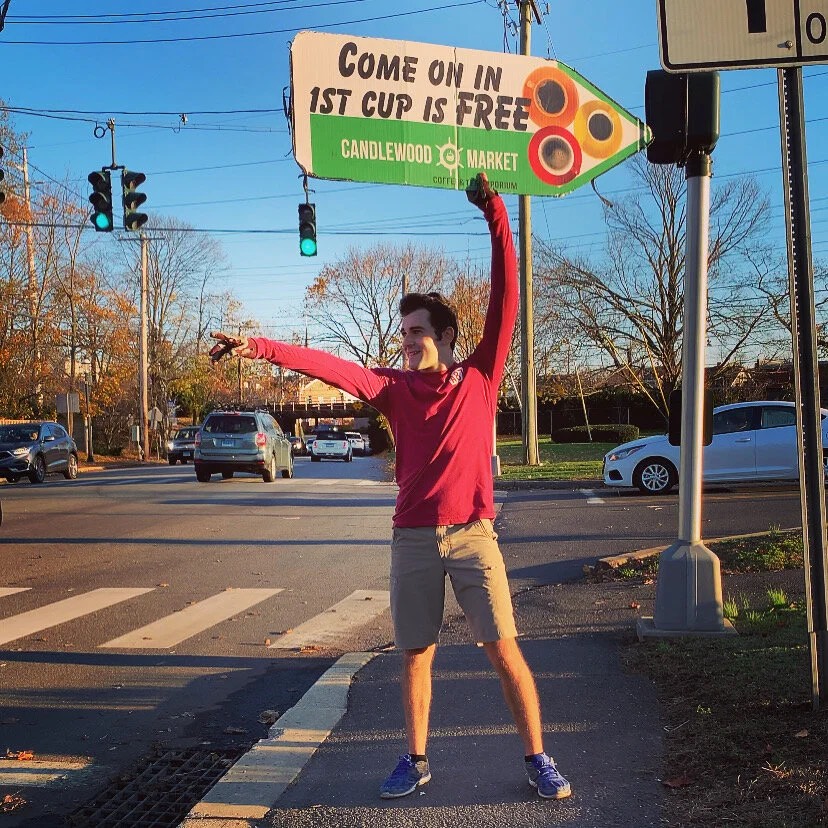
Jeremy spent many days interacting with hundreds of strangers while flying a sign to put a few bucks in his pocket. The number of broken promises he encountered was overwhelming. That kind of repeated disappointment convinces you the system is unreliable, even when the desire to change is strong. For Jeremy, the difference came when support was not only accessible but coordinated, not through a single program, but several working together.
A DART officer referred him to SRC, and he and I began working together right away. While navigating homelessness, he made the most of every resource available to him. He didn’t rely on just one agency; he used a combination of peer recovery coaching, harm reduction support, VA veteran services, and case management from Volunteers of America (VoA).
Anything that helped him move toward stability, he used, whether it was mental health support, paperwork assistance, recovery meetings, or steps toward housing.
That’s the heart of recovery. Because healing is rarely a straight line and recovery has multiple pathways, it doesn’t need to rely on a single method. Jeremy practiced honesty, asked for help when he needed it, and explored different types of recovery—including abstinence-based pathways, when he felt ready. As his life
became more stable, he eventually chose to give up alcohol altogether. But that came after he had support that matched his circumstances, not expectations he couldn’t meet.
His progress wasn’t about perfection. It was about having options and access to low-barrier recovery services that remained steady no matter where he was sleeping.
Taking Recovery Services Directly to HomelessCamps
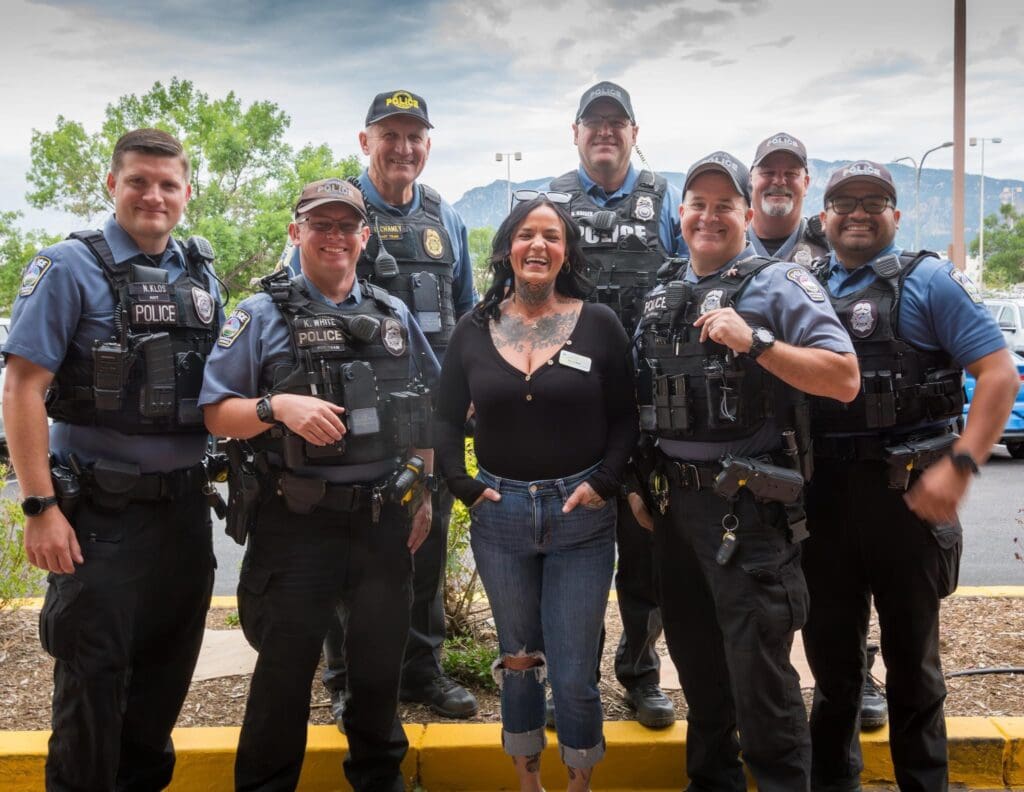
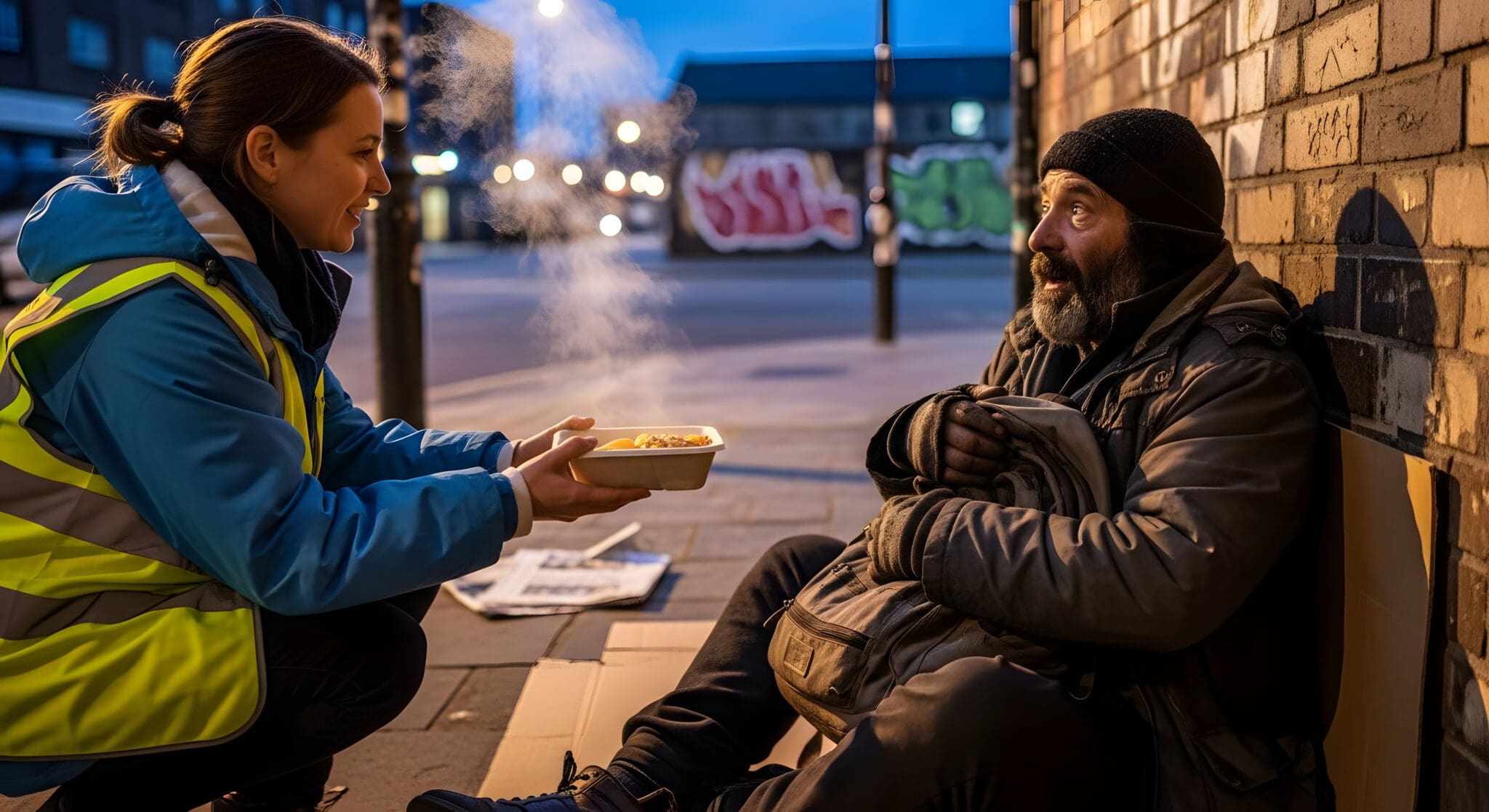
Last year, SRC strengthened this model by partnering with the Colorado Springs Police Department’s Homeless Outreach Team (HOT). Twice a week, HOT visits encampments across Colorado Springs and El Paso County to assess residents’ needs.
SRC joins them to provide substance use support, peer recovery coaching, and connection to treatment resources for anyone seeking help. For people without housing, traveling across town to an appointment can be nearly impossible. Outreach reduces that barrier. If someone has a phone, we encourage them to call or text when they’re able, and we adapt support to whatever their situation looks like that week. This type of flexible recovery
support for the unhoused keeps hope within reach.
Our outreach has grown beyond camps. SRC now connects with people at Marian House, across the Eastern Plains, in Teller County, and in Fremont County. This network is supported by teams like DART and the Homeless Outreach Program (HOP) through the Colorado Springs Fire Department and both county sheriff’s offices. These units help create coordinated care instead of isolated efforts.
Jeremy’s Progress
In just three months of dedicated effort and collaboration, Jeremyhas achieved stable housing, completed over 2 months of recovery, meets weekly with his coach, and is moving toward employment through an upcoming partnership with a case manager.
Let’s take a moment to celebrate Jeremy’s remarkable progress and the heart of peer coaching itself—its
potent ability to illuminate hope, empower sustainable change, and support people as they build a
brighter future.
A Final Word to Anyone Searching for Recovery While Homeless

If you’re unhoused and trying to figure out how to get substance use help, I want you to know this: recovery doesn’t require everything to be stable first. Stability grows from the small, realistic steps you take toward something better.
You don’t need a perfect plan or the “right” addiction recovery or alcohol recovery program. You’ll need a starting point. That can be one conversation, one connection, one moment of possibility.
That starting point might look like this:
- You talk with someone who listens.
- You connect with support that meets you where you are.
- You take one small step toward safety and stability.
There are many ways to recover, and every pathway is valid. And
every step forward matters.
If you reach out, SRC and our community partners will help connect you to the recovery support services that can move your life toward safer ground—one practical step at a time.